TL;DR
- Tracking wakings for 3 to 5 days reveals patterns you can act on.
- BedtimeCoach's plan addresses your child's night waking with guidance built from your child's age and situation.
- Room environment (darkness, temperature, white noise) plays a bigger role than most parents realize.
- A consistent response to night wakings helps your child learn to resettle.
Why This Happens
Night waking is biologically normal for young babies. Their stomachs are small, they need frequent calories, and their sleep cycles are short. The question is not whether they will wake, but whether they can fall back asleep on their own.
Sleep associations are the number one cause of unnecessary night waking in babies over 4 months. If your child needs rocking, nursing, or a pacifier to fall asleep at bedtime, they will need the same thing every time they wake between sleep cycles.
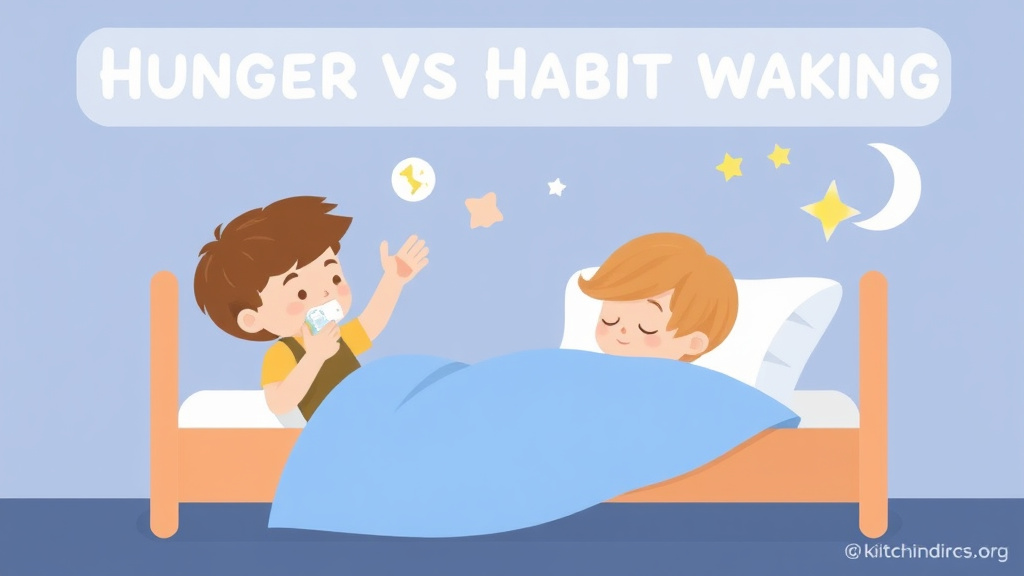
A healthy, well-fed baby over 6 months who is eating enough during the day can typically go 10 to 12 hours overnight without a feed. If they are still waking to eat, it may be habitual rather than a caloric need.
The way you respond to night waking matters. Rushing in immediately teaches your child that waking produces a response. Pausing for 2 to 5 minutes gives them a chance to resettle without your help.
The goal is not to eliminate all night wakings or create a robot baby who sleeps on command. The goal is to give your child the skills and environment they need to sleep well, most of the time, so the whole family can function.
One thing that surprises many parents is how much consistency matters. It is not about being rigid or inflexible. It is about giving your child the same cues, at roughly the same times, so their body and brain can predict what comes next. When sleep becomes predictable, it becomes easier.
How to Tell If It Is Hunger or Habit
| Age | Total Sleep | Night Sleep | Day Sleep | Naps |
|---|---|---|---|---|
| Newborn | 14-17h | 8-9h | 6-8h | 4-5 |
| 3 months | 14-16h | 9-10h | 4-5h | 3-4 |
| 6 months | 12-15h | 10-11h | 2.5-3.5h | 2-3 |
| 9 months | 12-15h | 10-12h | 2-3h | 2 |
| 12 months | 11-14h | 10-12h | 1.5-3h | 1-2 |
| 18 months | 11-14h | 10-12h | 1.5-3h | 1 |
| 2 years | 11-14h | 10-12h | 1-2h | 1 |
| 3 years | 10-13h | 10-12h | 0-1h | 0-1 |
Split nights (being wide awake for an hour or more in the middle of the night) are almost always a schedule issue. The fix is usually more wake time during the day, either through longer wake windows or capping a nap.
False starts (waking 30 to 60 minutes after bedtime) typically mean your child was overtired at bedtime. Try moving bedtime 15 to 30 minutes earlier and see if the false starts resolve.
Room environment matters. A pitch-dark room, consistent white noise, and a temperature between 68 and 72 degrees Fahrenheit creates the ideal conditions for uninterrupted sleep.
Social media can be both helpful and harmful when it comes to baby sleep. Comparison is inevitable, but every child is different. A method that worked for one family may not suit yours. Focus on your child's specific needs rather than chasing what worked for a stranger online.
Keeping a simple sleep log for a few days can reveal patterns you would otherwise miss. Note bedtime, wake time, nap times, night wakings, and how your child seemed (happy, fussy, overtired). Three to five days of data is usually enough to spot the issue.
Step-by-Step Response Plan
Teething is real, but it rarely causes multiple night wakings lasting more than a few nights. If your child has been waking for weeks and you are blaming teething, there is probably another factor at play.
Tracking your child's night wakings for 3 to 5 days reveals patterns. Note the time, how long they are awake, what you did, and how they responded. This data helps identify the root cause.
Habitual wakings (waking at the same time every night) can be broken with the 'wake to sleep' method: gently rousing your child 30 minutes before the usual waking time to reset their sleep cycle.
If you have tried everything and nothing seems to work, take a step back and look at the basics. Is the room dark enough? Is the temperature comfortable (between 68 and 72 degrees Fahrenheit)? Is there consistent white noise? These environmental factors are easy to overlook but make a real difference.
Many parents feel pressure to get sleep 'right' from the start. The truth is that baby sleep is a moving target. What works at 3 months may not work at 6 months, and what works at 6 months will definitely not work at 18 months. Adapting is part of the process.
When Night Waking Is Normal
Sleep is not just about nighttime. What happens during the day, from feeding patterns to activity levels to light exposure, directly affects how well your child sleeps at night. A well-structured day sets the stage for a smooth night.
There is no perfect age to address sleep. Whether your child is 4 months or 4 years, the principles of good sleep hygiene apply. Start where you are, with what you have, and make changes gradually.
Strategies to Reduce Night Wakings
Your pediatrician is your first resource for health-related sleep concerns. If your child snores, breathes through their mouth, seems excessively sleepy during the day, or has other symptoms beyond normal sleep struggles, get a medical evaluation before making changes to the sleep plan.
Related Reading
- Why Your Newborn Wakes at Night (and How to Fix It)
- Night Waking After Dropping a Nap
- Night Waking During Leap 5
Frequently Asked Questions
How do I know if my baby is hungry or just waking out of habit?
If your baby eats a full feed when offered, they may be hungry. If they take a few sips and fall back asleep, or if they are over 6 months and eating well during the day, the waking is likely habitual.
Is it normal for my baby to wake at night?
Night waking is normal for young babies. Most babies can sleep longer stretches by 4 to 6 months, but some continue waking once or twice until 9 to 12 months. Frequent waking beyond 6 months is often habitual.
Should I let my baby cry when they wake at night?
Your approach depends on your child's age, health, and your comfort level. Some parents use timed check-ins, others respond immediately. The key is consistency in whatever you choose.
Try our free tools
Get Your Personalized Sleep Plan
BedtimeCoach builds your Personalized Pediatric Sleep Plan around your child's age band, current struggles, and your chosen method, with a safe-sleep checklist and a printable 2-week sleep log.
The plan is $19 one-time. The optional Sleep Support membership is $4.99/mo, monthly only, cancel anytime.